
 中文简体
中文简体 русский
 Español
 عربى
عربى Português
 日本語
日本語 한국어
한국어

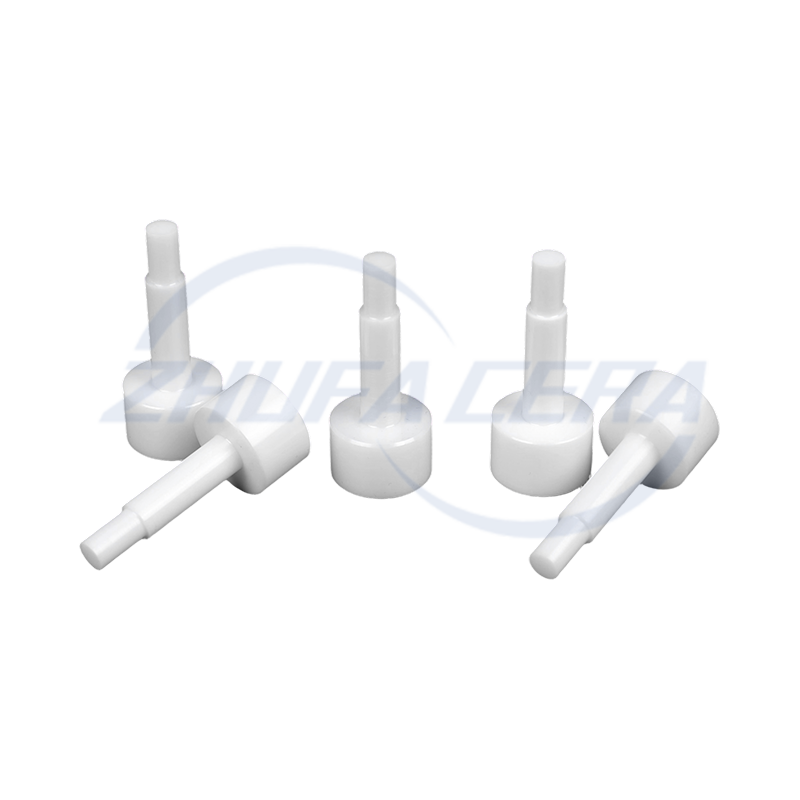
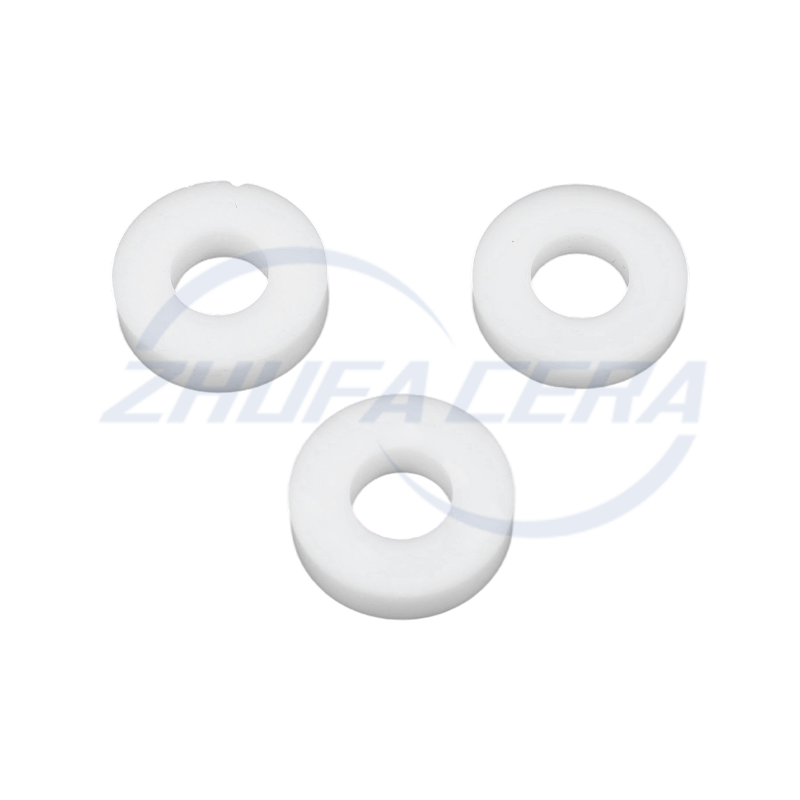
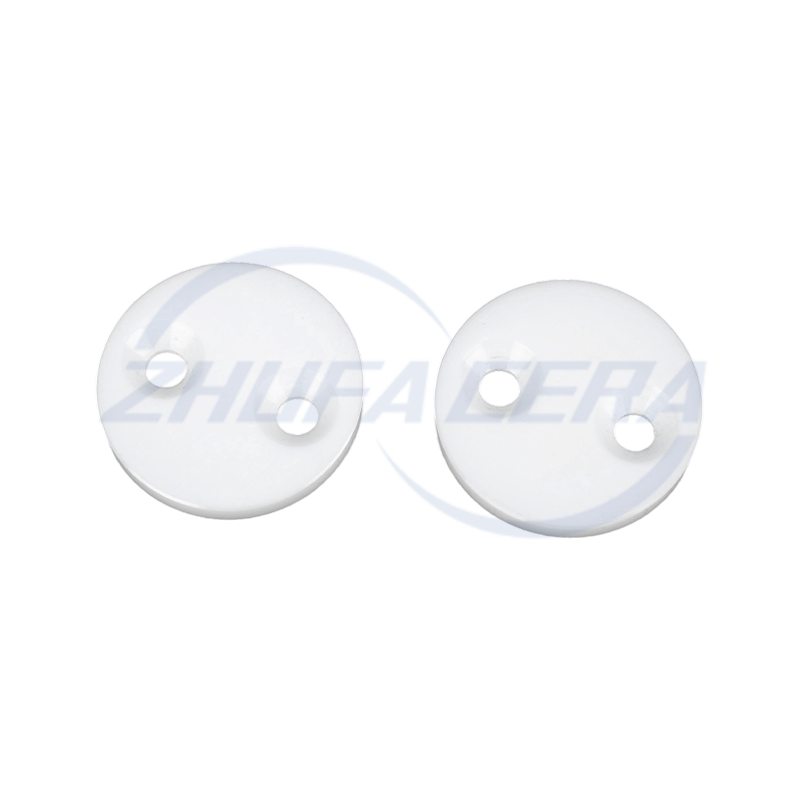
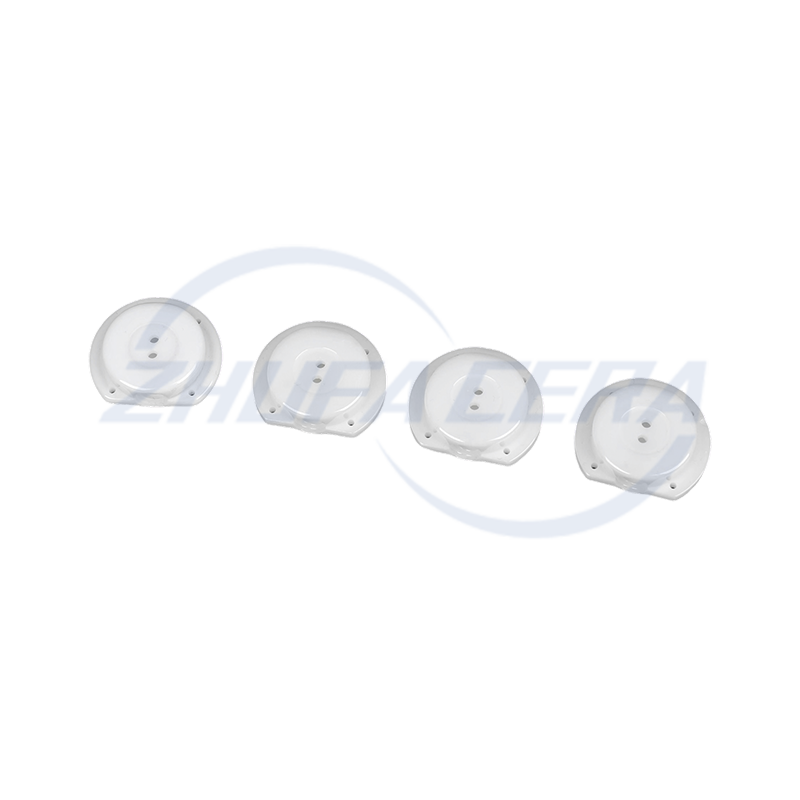
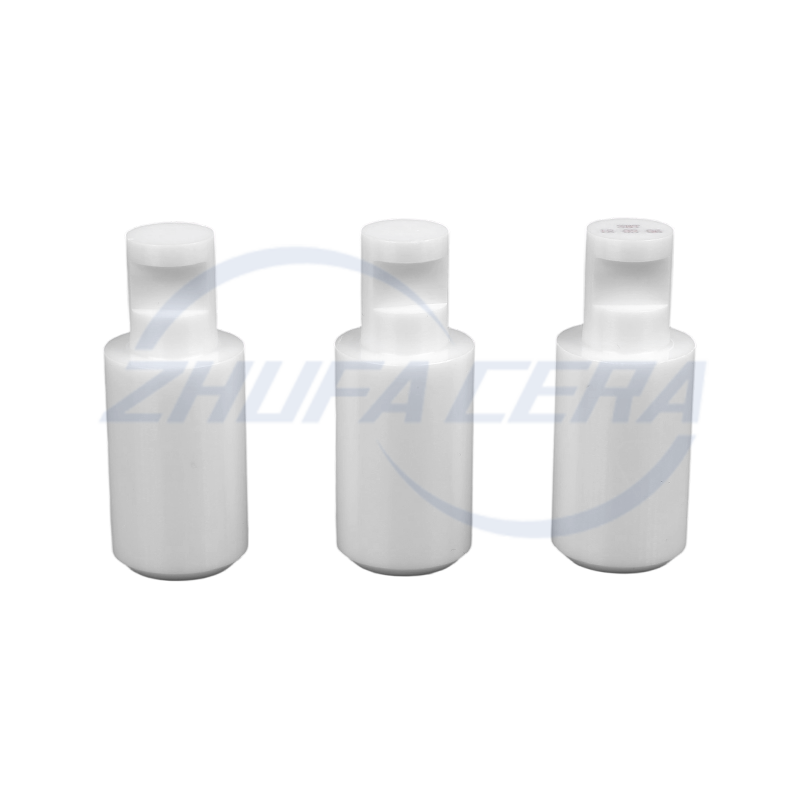
Ceramic components are precision-engineered parts manufactured from inorganic, non-metallic materials — typically oxides, nitrides, or carbides — that are shaped and then densified through high-temperature sintering. They are critical in modern industry because they deliver a unique combination of extreme hardness, thermal stability, electrical insulation, and chemical resistance that metals and polymers simply cannot match.
From semiconductor fabrication to aerospace turbines, from medical implants to automotive sensors, ceramic components underpin some of the most demanding applications on earth. This guide explains how they work, which types are available, how they compare, and how to choose the right ceramic component for your engineering challenge.
What Makes Ceramic Components Different from Metal and Polymer Parts?
Ceramic components differ fundamentally from metals and polymers in their atomic bonding structure, which gives them superior hardness and thermal resistance but lower fracture toughness.
Ceramics are held together by ionic or covalent bonds — the strongest types of chemical bonds. This means:
- Hardness: Most technical ceramics score 9–9.5 on the Mohs scale, compared to hardened steel at 7–8. Silicon carbide (SiC) has a Vickers hardness exceeding 2,500 HV, making it one of the hardest engineered materials on earth.
- Thermal stability: Alumina (Al₂O₃) retains mechanical strength up to 1,600°C (2,912°F). Silicon nitride (Si₃N₄) performs structurally at temperatures where most aerospace-grade superalloys begin to creep.
- Electrical insulation: Alumina has a volume resistivity of 10¹⁴ Ω·cm at room temperature — roughly 10 trillion times more resistive than copper — making it the substrate of choice for high-voltage electronics.
- Chemical inertness: Zirconia (ZrO₂) is unaffected by most acids, alkalis, and organic solvents at temperatures up to 900°C, enabling use in chemical processing equipment and medical implants exposed to body fluids.
- Low density: Silicon nitride has a density of just 3.2 g/cm³, compared to steel at 7.8 g/cm³ — enabling lighter components at equivalent or superior strength in rotating machinery.
The key tradeoff is brittleness: ceramics have low fracture toughness (typically 3–10 MPa·m½ versus 50–100 MPa·m½ for steel), meaning they fail suddenly under impact or tensile stress rather than deforming plastically. Engineering around this limitation — through geometry, surface finishing, and material selection — is the core challenge of ceramic component design.
Which Types of Ceramic Components Are Used in Industry?
The five most widely used types of technical ceramic components are alumina, zirconia, silicon carbide, silicon nitride, and aluminum nitride — each optimized for different performance requirements.
1. Alumina (Al₂O₃) Components
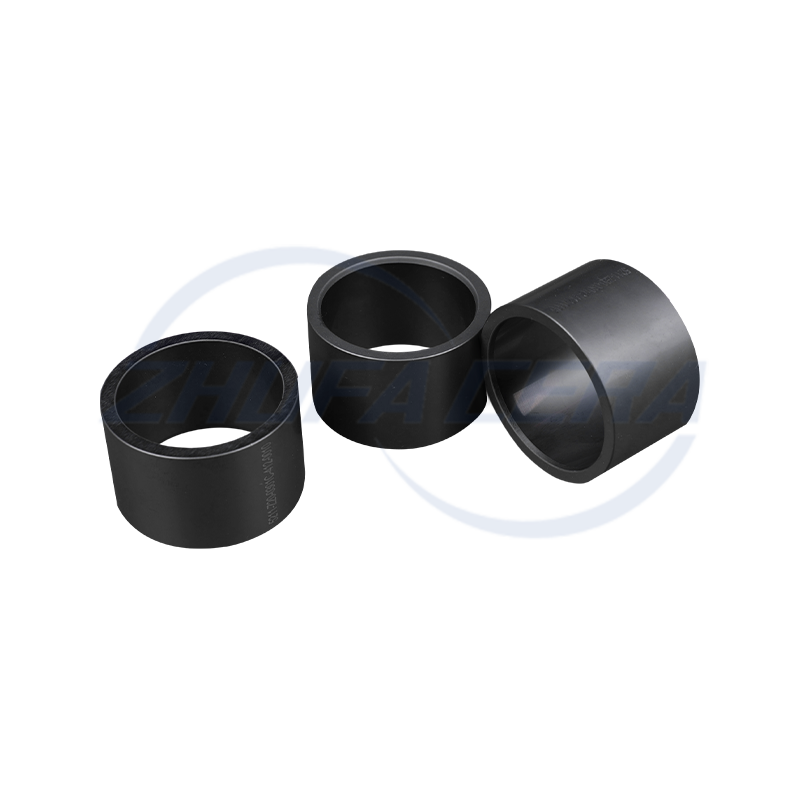
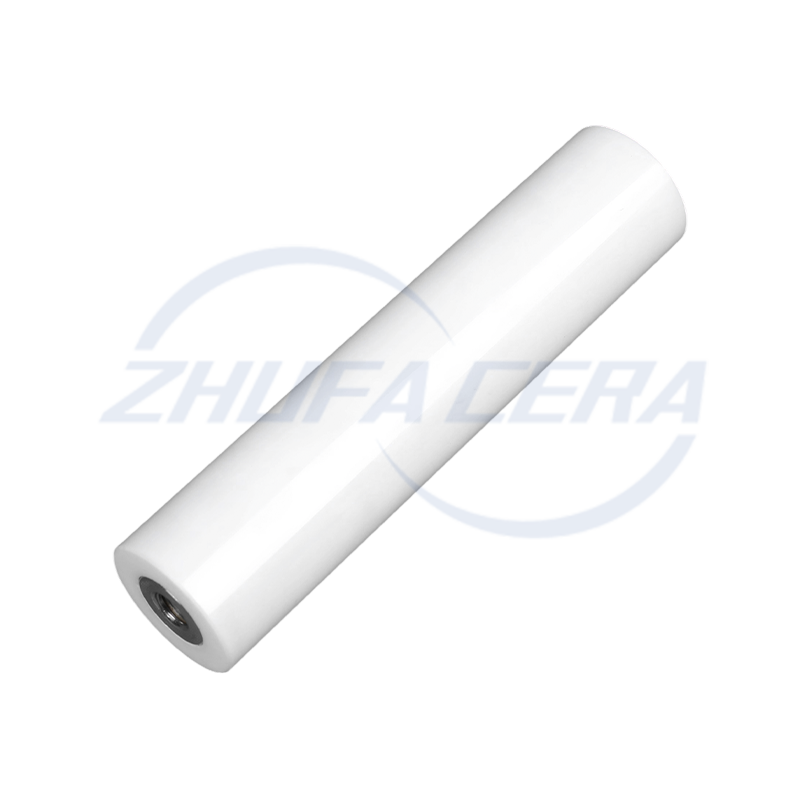
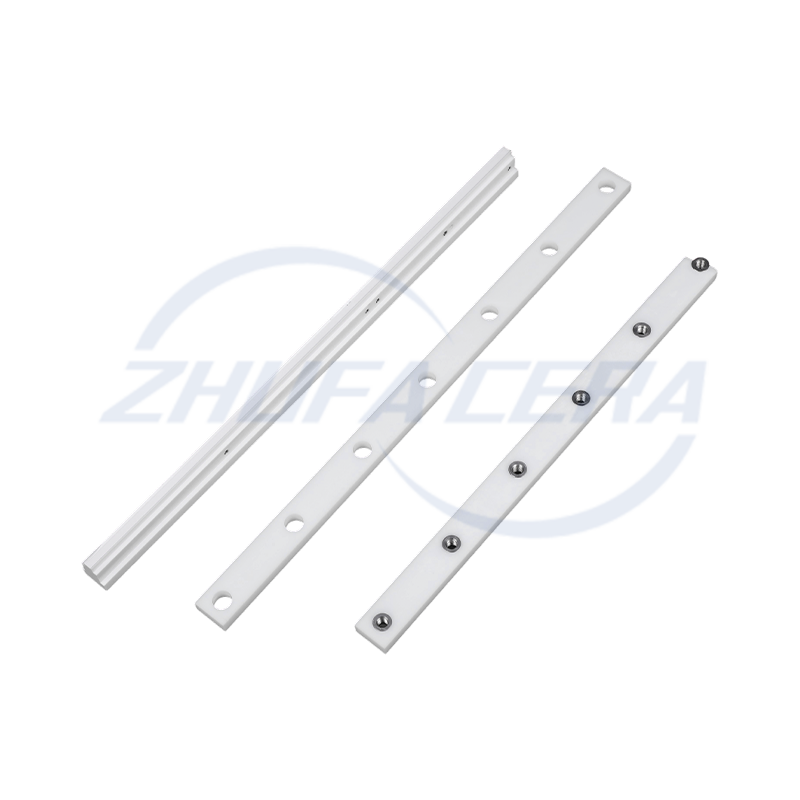
Alumina is the most widely produced technical ceramic, accounting for over 50% of global advanced ceramic output by volume. Available in purities from 85% to 99.9%, higher-purity alumina delivers improved electrical insulation, smoother surface finish, and greater chemical resistance. Common forms include tubes, rods, plates, bushings, insulators, and wear-resistant liners. Cost-effective and versatile, alumina is the default choice when no single extreme property is required.
2. Zirconia (ZrO₂) Components
Zirconia offers the highest fracture toughness of any oxide ceramic — up to 10 MPa·m½ in toughened grades — making it the ceramic most resistant to cracking. Yttria-stabilized zirconia (YSZ) is the gold standard for dental crowns, orthopedic femoral heads, and pump shaft seals. Its low thermal conductivity also makes it the preferred thermal barrier coating material for gas turbine blades, reducing metal substrate temperatures by up to 200°C.
3. Silicon Carbide (SiC) Components
Silicon carbide delivers an exceptional combination of hardness, thermal conductivity, and corrosion resistance. With a thermal conductivity of 120–200 W/m·K (3–5× higher than alumina), SiC dissipates heat efficiently while maintaining structural integrity above 1,400°C. It is the material of choice for semiconductor wafer processing equipment, ballistic armor plates, heat exchangers in aggressive chemical environments, and mechanical seals in high-speed pumps.
4. Silicon Nitride (Si₃N₄) Components
Silicon nitride is the strongest structural ceramic for dynamic and impact-loaded applications. Its self-reinforcing microstructure of interlocking rod-shaped grains gives it fracture toughness of 6–8 MPa·m½ — unusually high for a ceramic. Si₃N₄ bearings in high-speed machine tool spindles operate at surface speeds exceeding 3 million DN (speed factor), outperforming steel bearings in lubrication life, thermal expansion, and corrosion resistance.
5. Aluminum Nitride (AlN) Components
Aluminum nitride is uniquely positioned as an electrical insulator with very high thermal conductivity — up to 170–200 W/m·K, compared to alumina's 20–35 W/m·K. This combination makes AlN the preferred substrate for high-power electronics modules, laser diode mounts, and LED packages where heat must be rapidly conducted away from the junction while maintaining electrical isolation. Its thermal expansion coefficient closely matches silicon, reducing thermally induced stress in bonded assemblies.
How Do the Main Ceramic Component Materials Compare?
Each ceramic material offers a distinct set of trade-offs; no single material is optimal for all applications. The table below compares the five major types across seven critical engineering properties.
| Material | Max Use Temp (°C) | Hardness (HV) | Fracture Toughness (MPa·m½) | Thermal Conductivity (W/m·K) | Dielectric Strength (kV/mm) | Relative Cost |
|---|---|---|---|---|---|---|
| Alumina (99%) | 1,600 | 1,800 | 3–4 | 25–35 | 15–17 | Low |
| Zirconia (YSZ) | 1,000 | 1,200 | 8–10 | 2–3 | 10–12 | Medium–High |
| Silicon Carbide | 1,650 | 2,500 | 3–5 | 120–200 | —* | High |
| Silicon Nitride | 1,400 | 1,600 | 6–8 | 25–35 | 14–16 | Very High |
| Aluminum Nitride | 1,200 | 1,100 | 3–4 | 140–200 | 15–17 | Very High |
Table 1: Key engineering properties of the five major technical ceramic materials used in precision components. *SiC dielectric strength varies widely by sintering grade and dopant level.
How Are Ceramic Components Manufactured?
Ceramic components are produced through a multi-stage process of powder preparation, shaping, and high-temperature sintering — with the choice of shaping method fundamentally determining achievable geometry, dimensional tolerance, and production volume.
Dry Pressing
The most common high-volume shaping method. Ceramic powder mixed with a binder is compacted in a steel die under pressures of 50–200 MPa. Dimensional tolerances of ±0.5% are achievable pre-sinter, tightening to ±0.1% after grinding. Suitable for discs, cylinders, and simple prismatic shapes in production quantities of thousands to millions of pieces.
Isostatic Pressing (CIP / HIP)
Cold isostatic pressing (CIP) applies pressure uniformly from all directions via a pressurized fluid, eliminating density gradients and enabling larger or more complex near-net shapes. Hot isostatic pressing (HIP) combines pressure and heat simultaneously, achieving near-theoretical density (>99.9%) and eliminating internal porosity — critical for bearing-grade silicon nitride and medical-grade zirconia implants where sub-surface defects are unacceptable.
Ceramic Injection Molding (CIM)
CIM combines ceramic powder with a thermoplastic binder, injecting the mixture into precision molds at high pressure — directly analogous to plastic injection molding. After molding, the binder is removed through thermal or solvent debinding, and the part is sintered. CIM enables complex three-dimensional geometries with internal channels, threads, and thin walls, with tolerances of ±0.3–0.5% of dimension. Minimum practical wall thickness is approximately 0.5 mm. The process is economical for production volumes above approximately 10,000 pieces per year.
Tape Casting and Extrusion
Tape casting produces thin, flat ceramic sheets (20 µm to 2 mm thick) used for multilayer capacitors, substrates, and solid oxide fuel cell layers. Extrusion shapes ceramic paste through a die to produce continuous tubes, rods, and honeycomb structures — including the catalyst support substrates used in automotive catalytic converters, which may contain over 400 cells per square inch.
Additive Manufacturing (Ceramic 3D Printing)
Emerging technologies including stereolithography (SLA) with ceramic-loaded resins, binder jetting, and direct ink writing now enable complex one-off ceramic prototypes and small-series parts that are impossible to produce by conventional forming. Layer resolution of 25–100 µm is achievable, though sintered mechanical properties still lag slightly behind CIP or die-pressed equivalents. Adoption is growing rapidly in medical, aerospace, and research contexts.
Where Are Ceramic Components Used? Key Industry Applications
Ceramic components are deployed wherever extreme conditions — heat, wear, corrosion, or electrical stress — exceed what metals and plastics can reliably endure.
Semiconductor and Electronics Manufacturing
Ceramic components are indispensable in semiconductor fabrication. Alumina and SiC process chamber components (liners, focus rings, edge rings, nozzles) must withstand plasma etching environments with reactive fluorine and chlorine chemistries that would rapidly corrode any metal surface. The global market for semiconductor ceramic components exceeded $1.8 billion USD in 2023, driven by fab capacity expansion for advanced logic and memory chips.
Aerospace and Defense
Ceramic matrix composites (CMCs) — SiC fibers in a SiC matrix — are now used in commercial turbofan hot-section components including combustor liners and high-pressure turbine shrouds. CMC components are approximately 30% lighter than equivalent nickel superalloy parts and can operate at temperatures 200–300°C higher, enabling fuel efficiency gains of 1–2% per engine — significant over a 30-year aircraft lifecycle. Ceramic radomes protect radar systems from ballistic impact, rain erosion, and electromagnetic interference simultaneously.
Medical and Dental Devices
Zirconia is the dominant material for dental crowns, bridges, and implant abutments due to its tooth-like aesthetics, biocompatibility, and fracture resistance. Over 100 million zirconia dental restorations are placed globally each year. In orthopedics, ceramic femoral heads in total hip replacements exhibit wear rates as low as 0.1 mm³ per million cycles — roughly 10× lower than cobalt-chrome alloy heads — reducing debris-induced osteolysis and implant revision rates.
Automotive Systems
Every modern internal combustion and hybrid vehicle contains multiple ceramic components. Zirconia oxygen sensors monitor exhaust gas composition for real-time fuel control — each sensor must accurately measure oxygen partial pressure across a temperature range of 300–900°C for the vehicle's operational life. Silicon nitride glow plugs reach operating temperature in under 2 seconds, enabling cold diesel starts while reducing NOx emissions. SiC power electronics modules in electric vehicles handle switching frequencies and temperatures that silicon IGBTs cannot sustain.
Industrial Wear and Corrosion Applications
Ceramic wear components — pump impellers, valve seats, cyclone liners, pipe bends, and cutting tool inserts — dramatically extend service life in abrasive and corrosive environments. Alumina ceramic pipe liners in mineral slurry transport last 10–50× longer than carbon steel equivalents, offsetting their higher initial cost within the first maintenance cycle. Silicon carbide seal faces in chemical process pumps operate reliably in fluids ranging from sulfuric acid to liquid chlorine.
Ceramic Components vs. Metal Components: A Direct Comparison
Ceramic and metal components are not interchangeable — they serve fundamentally different performance envelopes, and the best choice depends entirely on the specific operating conditions.
| Property | Technical Ceramics | Stainless Steel | Titanium Alloy | Verdict |
|---|---|---|---|---|
| Max service temp. | Up to 1,650°C | ~870°C | ~600°C | Ceramic wins |
| Hardness | 1,100–2,500 HV | 150–250 HV | 300–400 HV | Ceramic wins |
| Fracture toughness | 3–10 MPa·m½ | 50–100 MPa·m½ | 60–100 MPa·m½ | Metal wins |
| Density (g/cm³) | 3.2–6.0 | 7.9 | 4.5 | Ceramic wins |
| Electrical insulation | Excellent | None (conductor) | None (conductor) | Ceramic wins |
| Machinability | Difficult (diamond tools) | Good | Moderate | Metal wins |
| Corrosion resistance | Excellent (most media) | Good | Excellent | Draw |
| Unit cost (typical) | High–Very High | Low–Medium | Medium–High | Metal wins |
Table 2: Head-to-head comparison of technical ceramics versus stainless steel and titanium alloy across eight engineering properties relevant to component selection.
How to Choose the Right Ceramic Component for Your Application
Selecting the correct ceramic component requires systematically matching material properties to your specific operating environment, load type, and lifecycle cost target.
- Define the failure mode first: Is the part failing from wear, corrosion, thermal fatigue, dielectric breakdown, or mechanical overload? Each failure mode points to a different material priority — hardness for wear, chemical stability for corrosion, thermal conductivity for heat management.
- Specify your operating temperature range precisely: Zirconia's phase transformation around 1,000°C makes it unsuitable above that threshold. If your application cycles between room temperature and 1,400°C, silicon nitride or silicon carbide is required.
- Assess load type and direction: Ceramics are strongest in compression (typically 2,000–4,000 MPa compressive strength) and weakest in tension (100–400 MPa). Design ceramic components to operate predominantly in compression, and avoid stress concentrators such as sharp corners and abrupt cross-section changes.
- Evaluate total cost of ownership, not unit price: A silicon carbide pump impeller costing 8× more than a cast iron equivalent may reduce replacement frequency from monthly to once every 3–5 years in an abrasive slurry service, delivering 60–70% maintenance cost savings over a 10-year period.
- Specify surface finish and dimensional tolerance requirements: Ceramic components can be ground and lapped to surface roughness values below Ra 0.02 µm (mirror finish) and tolerances of ±0.002 mm for precision bearing races — but these finishing operations add significant cost and lead time.
- Consider joining and assembly requirements: Ceramics cannot be welded. Joining methods include brazing (using active metal brazes), adhesive bonding, mechanical clamping, and shrink-fit assembly. Each imposes constraints on geometry and operating temperature.
Frequently Asked Questions About Ceramic Components
Q: Why are ceramic components so expensive compared to metal parts?
The high cost of ceramic components stems from raw material purity requirements, energy-intensive sintering, and the difficulty of precision finishing. High-purity ceramic powders (99.99% Al₂O₃, for example) can cost $50–$500 per kilogram — far exceeding most metal powders. Sintering at 1,400–1,800°C for 4–24 hours in controlled atmospheres requires specialized kiln infrastructure. Post-sinter grinding with diamond tooling at low feed rates adds hours of machining time per part. However, when evaluated on total cost of ownership over a full service life, ceramic components frequently deliver a lower overall cost than metal alternatives in demanding applications.
Q: Can ceramic components be repaired if they crack or chip?
In most structural and high-performance applications, cracked ceramic components must be replaced rather than repaired, because any crack or void represents a stress concentration that will propagate under cyclic loading. Limited repair options exist for non-structural applications: high-temperature ceramic adhesives can fill chips in furnace furniture and refractory lining components. For safety-critical parts — bearings, implants, pressure vessels — replacement is mandatory upon detection of any defect. This is why non-destructive testing (dye penetrant inspection, ultrasonic testing, CT scanning) is standard practice for aerospace and medical ceramic components.
Q: What is the difference between traditional ceramics and technical (advanced) ceramics?
Traditional ceramics (bricks, porcelain, earthenware) are made from naturally occurring clays and silicates, while technical ceramics use high-purity, engineered powders with tightly controlled chemistry and microstructure. Traditional ceramics have broad compositional tolerances and relatively modest mechanical properties. Technical ceramics are manufactured to exacting specifications — powder particle size distribution, sintering atmosphere, density, and grain size are all controlled — to achieve reproducible, predictable performance. The global advanced ceramics market was valued at approximately $11.5 billion USD in 2023 and is projected to exceed $19 billion by 2030, driven by electronics, energy, and medical demand.
Q: Are ceramic components suitable for food contact and medical applications?
Yes — several ceramic materials are specifically approved and widely used in food contact and medical applications due to their biocompatibility and chemical inertness. Zirconia and alumina are listed as biocompatible materials under ISO 10993 for medical devices. Zirconia implant components pass cytotoxicity, genotoxicity, and systemic toxicity testing. For food contact, ceramics do not leach metallic ions, do not support microbial growth on smooth surfaces, and withstand autoclaving at 134°C. The key requirement is achieving a sufficiently smooth surface finish (Ra < 0.2 µm for implants, < 0.8 µm for food equipment) to prevent bacterial adhesion.
Q: How do ceramic components perform in thermal shock conditions?
Thermal shock resistance varies significantly between ceramic types and is a critical selection criterion for applications involving rapid temperature cycling. Silicon carbide and silicon nitride have the best thermal shock resistance among structural ceramics, owing to their combination of high thermal conductivity (which quickly equalizes temperature gradients) and high strength. Alumina has moderate thermal shock resistance — it can typically withstand temperature differentials of 150–200°C applied instantaneously. Zirconia has poor thermal shock resistance above its phase transformation temperature. For kiln furniture, burner nozzles, and refractory applications involving rapid heating and quenching, cordierite and mullite ceramics are preferred due to their very low thermal expansion coefficients.
Q: What lead times should I expect when ordering custom ceramic components?
Lead times for custom ceramic components typically range from 4 to 16 weeks depending on complexity, quantity, and material. Standard catalogue shapes (rods, tubes, plates) in alumina are often available from stock or within 2–4 weeks. Custom-pressed or CIM components require tooling fabrication (4–8 weeks) before production can begin. Tight-tolerance ground components add 1–3 weeks of finishing time. HIP-densified parts and flame-retardant or specialty-certified grades have the longest lead times — 12–20 weeks — due to limited processing capacity. Planning ceramic component procurement early in the product development cycle is strongly advised.
Conclusion: Why Ceramic Components Continue to Expand Their Role in Engineering
Ceramic components have evolved from a niche solution for extreme environments into a mainstream engineering choice across electronics, medicine, energy, defense, and transportation. Their ability to operate where metals fail — at temperatures above 1,000°C, in corrosive media, under severe abrasion, and at electrical potentials that would destroy metal insulators — makes them irreplaceable in the architectures of modern high-performance systems.
The continued development of tougher zirconia composites, CMC structures for jet propulsion, and ceramic additive manufacturing is steadily eroding the brittleness limitations that once confined ceramics to static applications. As electric vehicles, semiconductor scaling, renewable energy infrastructure, and precision medicine demand higher-performing components, ceramic components will play an increasingly central role in the materials solutions that make those technologies possible.
Whether you are replacing a worn metal seal, designing a high-voltage insulator, specifying an implant material, or building next-generation power electronics, understanding the properties, processing methods, and trade-offs of technical ceramics will equip you to make better-informed, longer-lasting engineering decisions.