
 中文简体
中文简体 русский
 Español
 عربى
عربى Português
 日本語
日本語 한국어
한국어

Advanced ceramic solutions are engineered materials that combine exceptional hardness, thermal resistance, electrical insulation, and chemical stability — properties that conventional metals and polymers simply cannot match. From aerospace turbine components to biomedical implants and semiconductor substrates, advanced ceramics are quietly powering some of the most critical technologies of our time. This article explores what they are, how they work, which industries benefit most, and why the global market is accelerating toward a projected USD 14.8 billion by 2030.
How Do Advanced Ceramic Solutions Differ from Traditional Ceramics?
Advanced ceramics are fundamentally different from traditional ceramics in composition, precision, and performance. While conventional ceramics — such as pottery or basic bricks — rely on natural clay fired at moderate temperatures, advanced ceramics are synthesized from ultra-pure chemical compounds like alumina (Al₂O₃), silicon carbide (SiC), zirconia (ZrO₂), and silicon nitride (Si₃N₄), processed under tightly controlled conditions.
The key distinction lies in microstructure engineering. By controlling grain size down to the nanometer scale, manufacturers can tune mechanical, thermal, and electrical properties with remarkable precision. The result is a material class that delivers:
- Hardness rivaling diamond in certain compositions (e.g., cubic boron nitride ceramics reaching Vickers hardness above 3,500 HV)
- Operating temperatures exceeding 1,600°C without structural degradation
- Electrical resistivity ranging from near-perfect insulator to semiconductor, depending on doping
- Corrosion resistance to acids, alkalis, and molten metals that destroy stainless steel
- Density 30–50% lower than steel, enabling lightweight structural components
Traditional vs. Advanced Ceramics: A Side-by-Side Comparison
| Property | Traditional Ceramics | Advanced Ceramic Solutions |
| Raw Materials | Natural clay, silica | Ultra-pure Al₂O₃, SiC, ZrO₂, Si₃N₄ |
| Max Use Temperature | ~600°C | Up to 1,800°C+ |
| Dimensional Tolerance | ±1–3 mm | ±0.001–0.05 mm |
| Mechanical Strength | 20–80 MPa (flexural) | 200–1,400 MPa (flexural) |
| Electrical Function | Passive insulator only | Insulator, semiconductor, or conductor |
| Typical Applications | Tiles, sanitary ware, bricks | Aerospace, medical, semiconductors, energy |
Table 1: Key differences between traditional ceramics and advanced ceramic solutions across critical performance parameters.
Which Industries Rely Most Heavily on Advanced Ceramic Solutions?
The aerospace, medical, electronics, and energy sectors are the largest and fastest-growing consumers of advanced ceramic solutions. Each industry exploits a distinct subset of ceramic properties, and demand from all four is growing simultaneously — a convergence that explains why the global advanced ceramics market was valued at approximately USD 9.2 billion in 2023 and is projected to expand at a CAGR of 7.1% through 2030.
Aerospace and Defense
In aerospace, advanced ceramics solve the fundamental problem of combining lightness with extreme heat resistance. Silicon carbide ceramic matrix composites (SiC-CMCs) are now used in turbine hot-section components, replacing nickel superalloys at temperatures above 1,200°C. This enables engine operating temperatures 200–300°C higher than metal-based systems, directly improving fuel efficiency by 15–20%. Military applications include radome materials (alumina and silicon nitride for radar transparency), ceramic armor plates rated to stop armor-piercing rounds, and thermal protection systems for hypersonic vehicles.
Medical and Biomedical Devices
Zirconia and alumina have become the gold standard for orthopedic and dental implants because of their biocompatibility and wear resistance. Zirconia femoral heads in total hip replacements show wear rates of less than 0.1 mm³ per million cycles — roughly 100 times lower than conventional polyethylene alternatives. In dentistry, zirconia crowns and bridges now account for over 60% of all-ceramic restorations globally, driven by their tooth-like translucency, strength exceeding 900 MPa, and proven 10-year survival rates above 96%.
Semiconductor and Electronics Manufacturing
Advanced ceramic solutions are indispensable in semiconductor fabrication, where contamination-free environments and extreme precision are non-negotiable. Alumina and yttria-stabilized zirconia (YSZ) are used for etch chamber liners, wafer chucks, and electrostatic chucks (ESCs) that hold 300 mm silicon wafers during plasma processing. Silicon carbide is gaining rapid traction as a substrate for power electronics in electric vehicles — SiC MOSFETs switch 3–5 times faster than silicon equivalents and operate at junction temperatures up to 200°C, enabling smaller, lighter inverters.
Energy and Environmental Applications
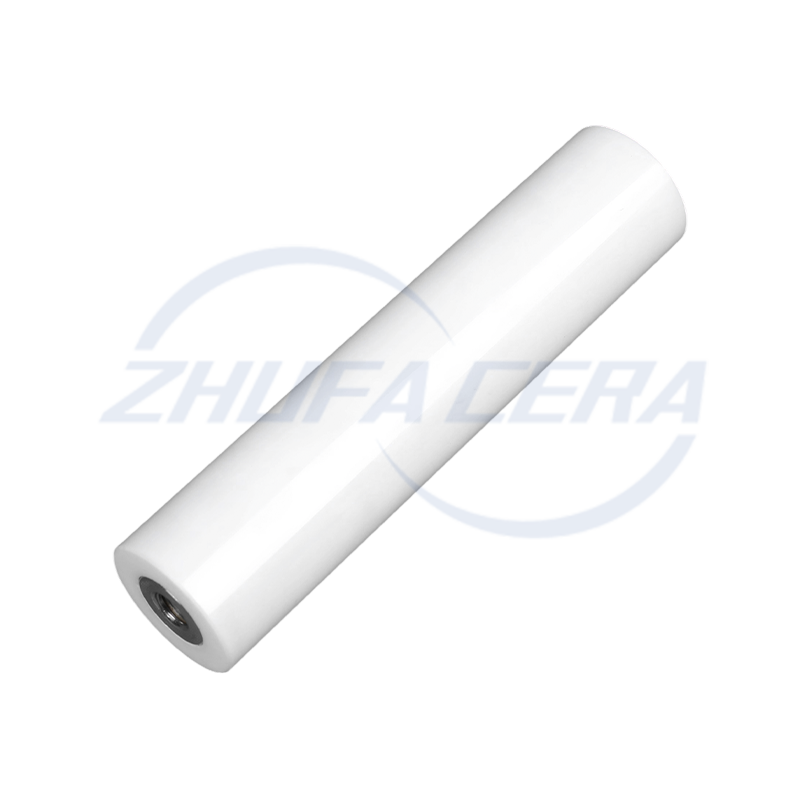
In the energy sector, advanced ceramics enable cleaner combustion, more efficient power generation, and longer-lasting equipment. Alumina tubes and thermocouple sheaths withstand corrosive flue gases in industrial furnaces at 1,700°C. Solid oxide fuel cells (SOFCs) use yttria-stabilized zirconia electrolytes that achieve electrical efficiencies of 60–65%, compared to 35–40% for conventional combustion plants. Ceramic membranes are increasingly used in industrial water purification, removing particles down to 0.01 microns with a service life three to five times that of polymer equivalents.
How Are Advanced Ceramic Solutions Manufactured?
The manufacturing of advanced ceramics is a multi-step, precision-intensive process that begins with ultra-pure powder synthesis and ends with diamond-ground finished components. Each step is critical: a single contamination event or incorrect sintering temperature can render an entire batch unusable.
Key Manufacturing Stages
- Powder Synthesis: Chemical vapor deposition (CVD), sol-gel processes, or hydrothermal synthesis produce starting powders with purity levels above 99.9% and particle sizes as small as 50 nm.
- Shaping / Forming: Methods include dry pressing, isostatic pressing, injection molding, extrusion, tape casting, and slip casting — chosen based on geometry complexity and production volume.
- Sintering: Green compacts are densified at 1,300–1,800°C under controlled atmospheres (air, argon, nitrogen, or vacuum). Hot pressing and spark plasma sintering (SPS) can achieve near-theoretical density (>99%) in hours rather than days.
- Machining and Finishing: Diamond grinding, laser cutting, and ultrasonic machining achieve tolerances of ±0.001 mm on sintered parts. Surface roughness values of Ra < 0.1 µm are achievable for sealing and bearing surfaces.
- Quality Assurance: Non-destructive testing (NDT) including X-ray computed tomography (CT) scanning, ultrasonic testing, and fluorescent penetrant inspection ensures zero defects in safety-critical components.
Additive Manufacturing: The Next Frontier
Ceramic 3D printing — including stereolithography (SLA), binder jetting, and direct ink writing — is opening new design freedoms for advanced ceramic solutions. Complex internal geometries that were previously impossible to machine, such as conformal cooling channels in ceramic molds or lattice-structured bone implants, can now be produced in a single operation. Early adopters report lead time reductions of 60–70% for prototype ceramic components and tooling inserts.
Why Are Advanced Ceramic Solutions Outperforming Metals in High-Demand Applications?
Advanced ceramics outperform metals in applications demanding extreme heat, wear resistance, or electrical properties because they are fundamentally more stable at the atomic level. Metals rely on metallic bonding — electrons free to move, which creates conductivity but also susceptibility to oxidation, creep, and thermal fatigue. Ceramics, with their ionic and covalent bonds, are inherently resistant to these failure modes.
Advanced Ceramics vs. Metals: Performance Benchmarks
| Performance Factor | Steel / Superalloy | Advanced Ceramic (SiC / Al₂O₃) |
| Max Continuous Use Temp. | ~1,050°C (Inconel 718) | 1,600°C (SiC); 1,750°C (Al₂O₃) |
| Density | 7.8–8.2 g/cm³ | 3.1–3.9 g/cm³ |
| Hardness (Vickers) | 150–700 HV | 1,800–2,800 HV |
| Corrosion Resistance | Requires protective coatings | Inherently resistant to most acids/alkalis |
| Electrical Insulation | Conductive | Excellent insulator (Al₂O₃: 10¹⁴ Ω·cm) |
| Typical Cost (material) | USD 2–25/kg | USD 50–500/kg (component-dependent) |
Table 2: Performance comparison between conventional metals/superalloys and advanced ceramic solutions across critical engineering parameters.
The cost premium of advanced ceramics is real, but it must be evaluated against total cost of ownership. A silicon carbide pump seal may cost 8–10 times more than a metal equivalent upfront, yet last 5–8 years compared to a metal component's 6–18 months in corrosive chemical service — delivering a net lifecycle saving of 40–60%.
What Types of Advanced Ceramic Solutions Are Available for Industrial Use?
The advanced ceramics family encompasses oxide ceramics, non-oxide ceramics, and ceramic composites — each with a distinct performance profile suited to different industrial challenges. Selecting the right ceramic material is as important as selecting the right geometry or manufacturing method.
Oxide Ceramics
- Alumina (Al₂O₃): The workhorse of advanced ceramics. Excellent electrical insulation, hardness (~1,800 HV), and corrosion resistance. Used in electrical feedthroughs, wear-resistant liners, and biomedical implants. Cost-effective at scale.
- Zirconia (ZrO₂): Outstanding fracture toughness (up to 10 MPa·m½), low thermal conductivity, and high-temperature oxygen ion conductivity. Applications: dental crowns, thermal barrier coatings, fuel cell electrolytes.
- Mullite (Al₆Si₂O₁₃): Exceptional thermal stability and creep resistance at temperatures above 1,500°C. Primary use in high-temperature furnace furniture and kiln hardware.
Non-Oxide Ceramics
- Silicon Carbide (SiC): Highest thermal conductivity among ceramics (120–270 W/m·K), extreme hardness, and outstanding wear resistance. Dominant in semiconductor processing equipment, mechanical seals, and ballistic protection.
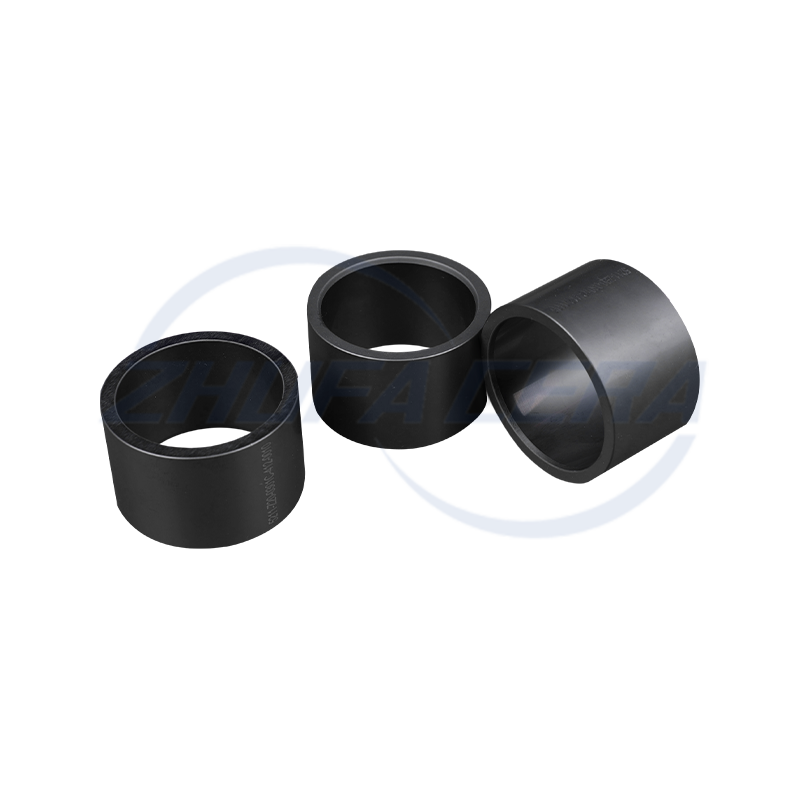
- Silicon Nitride (Si₃N₄): Best combination of strength and toughness in the non-oxide family. Used for cutting tools, bearings, turbocharger rotors, and welding fixtures due to its resistance to thermal shock.
- Boron Carbide (B₄C): Third-hardest known material (Vickers ~3,000 HV), extremely low density (2.52 g/cm³). Chosen for lightweight ceramic armor, nuclear control rods, and abrasive blasting nozzles.
Ceramic Matrix Composites (CMCs)
CMCs solve the classic brittleness problem of monolithic ceramics by incorporating ceramic fibers (SiC or carbon) into a ceramic matrix. The result is a material with fracture toughness 3–5 times higher than unreinforced ceramics, enabling their use in turbine blades, brake discs, and structural panels where sudden impact is a concern. SiC/SiC CMCs are already flying in commercial jet engines, reducing component weight by up to 30% compared to the nickel superalloys they replace.
How to Choose the Right Advanced Ceramic Solution for Your Application
Selecting the optimal advanced ceramic material requires a structured evaluation of operating environment, mechanical loads, and production economics. A systematic approach prevents costly material mismatches — the most common cause of premature failure in ceramic components.
Material Selection Guide by Application Priority
| Primary Requirement | Recommended Ceramic | Typical Use Case |
| Max wear resistance | SiC or B₄C | Pump seals, nozzles, armor |
| Biocompatibility | Zirconia or Alumina | Implants, dental prosthetics |
| Electrical insulation | High-purity Alumina | IC substrates, insulators |
| Thermal management | AlN or SiC | Power electronics, heat sinks |
| Thermal shock resistance | Si₃N₄ or CMC | Turbine blades, cutting tools |
| Cost-performance balance | Standard Alumina (96–99%) | General industrial components |
Table 3: Material selection guide for advanced ceramic solutions based on primary engineering requirement.
Why Is Demand for Advanced Ceramic Solutions Growing So Rapidly?
Four converging global megatrends are driving accelerated demand for advanced ceramic solutions: electrification of transport, miniaturization of electronics, decarbonization of industry, and the aging global population requiring more medical implants.
- Electric Vehicles (EVs): The global EV market is expected to surpass 40 million units annually by 2030. Each EV requires SiC power modules, ceramic battery separators, and alumina components in thermal management systems — representing an estimated 2–4 kg of advanced ceramics per vehicle.
- 5G and AI Infrastructure: 5G base stations and AI data centers require ultra-low-loss dielectric ceramics for filters and resonators, plus high-thermal-conductivity substrates for power amplifiers. The 5G infrastructure market alone is projected to exceed USD 700 billion by 2030.
- Hydrogen Economy: Solid oxide electrolyzers and fuel cells — both reliant on zirconia-based electrolytes — are scaling rapidly as hydrogen is positioned as a clean energy carrier for hard-to-decarbonize industries.
- Aging Population: The global population aged 65+ is projected to double by 2050, driving demand for ceramic joint replacements and dental restorations. The orthopedic ceramics segment alone was valued at over USD 1.2 billion in 2023.
Frequently Asked Questions About Advanced Ceramic Solutions
Q: Are advanced ceramic solutions always brittle?
Modern advanced ceramics are engineered to significantly mitigate brittleness. Transformation-toughened zirconia undergoes a stress-induced phase change at crack tips that actually arrests crack propagation — boosting fracture toughness to 8–10 MPa·m½, comparable to some cast irons. Ceramic matrix composites further improve damage tolerance by allowing controlled fiber pull-out during fracture, preventing catastrophic failure. Brittleness remains higher than ductile metals, but design strategies including compressive pre-stressing, layered architectures, and conservative safety factors make advanced ceramics reliable in structural roles.
Q: How long does it take to manufacture a custom advanced ceramic component?
Lead times for custom advanced ceramic parts typically range from 4 to 16 weeks, depending on complexity and material. Simple pressed shapes from standard alumina may be available in 3–4 weeks. Complex, tight-tolerance SiC or Si₃N₄ components requiring multi-stage machining and CT inspection can take 12–16 weeks. Ceramic 3D printing is reducing prototype lead times to 1–3 weeks for geometrically complex parts.
Q: Can advanced ceramic solutions be joined to metal components?
Yes — ceramic-to-metal joining is a well-established engineering discipline using brazing, diffusion bonding, adhesive bonding, and mechanical fastening. Active metal brazing (AMB), using silver-copper-titanium filler alloys at 800–900°C, creates hermetic ceramic-metal joints used in vacuum feedthroughs, medical device housings, and power electronics packages. Thermal expansion mismatch must always be managed through joint design or compliant interlayers to prevent thermally induced cracking.
Q: What certifications should I look for in an advanced ceramic solutions supplier?
For safety-critical applications, supplier quality systems should meet ISO 9001 as a minimum, with ISO 13485 for medical ceramics and AS9100 for aerospace components. Material certifications should include EN/ASTM chemical composition and mechanical property test reports, with RoHS compliance for electronics applications. Suppliers serving nuclear applications must additionally comply with ASME NQA-1 quality assurance programs.
Q: What is the environmental impact of advanced ceramic solutions?
Advanced ceramics have a mixed environmental profile: energy-intensive to produce but extremely durable and often enabling clean-energy technologies. Sintering alumina components requires approximately 25–40 kWh/kg — higher than steel production. However, ceramic components in industrial equipment routinely last 5–10 times longer than metal equivalents, reducing total material throughput. Critically, ceramics are enabling the clean energy transition via EV power electronics, fuel cells, and solar thermal systems — making their lifecycle environmental benefit significantly positive in most contexts.
Conclusion: Why Advanced Ceramic Solutions Are a Strategic Investment
Advanced ceramic solutions are no longer niche materials reserved for space exploration — they are becoming mainstream engineering choices wherever performance, reliability, and longevity matter. As manufacturing techniques mature, costs fall, and global demand from electrification, digitalization, and healthcare accelerates, ceramics are transitioning from specialist solution to standard specification in an expanding range of industries.
For engineers and procurement professionals, the message is clear: evaluate advanced ceramics not on upfront material cost alone, but on total lifecycle value. The combination of superior wear resistance, thermal stability, chemical inertness, and biocompatibility delivered by today's advanced ceramic solutions represents a performance ceiling that conventional materials increasingly cannot reach.
Whether you are specifying components for a next-generation semiconductor tool, designing a joint replacement implant, or engineering a high-efficiency power converter, advanced ceramic solutions offer a proven, technically superior pathway — backed by decades of research, robust supply chains, and a growing body of field-validated performance data across the world's most demanding applications.