FOLLOW US :


 Email: zf@zfcera.com
 Telephone: +86-188 8878 5188


 中文简体
中文简体 русский
 Español
 عربى
عربى Português
 日本語
日本語 한국어
한국어

Ceramic Tube Supplier
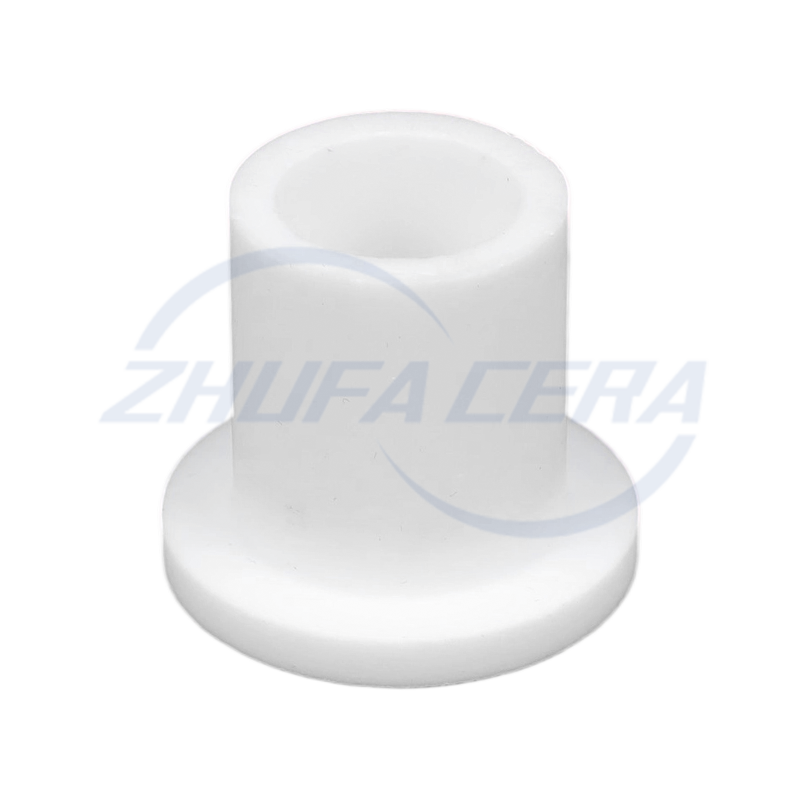
Ceramic tubes are hollow, cylindrical components made from high-performance ceramic materials such as alumina, zirconia, and silicon nitride. Their core advantage lies in combining the inherently superior properties of ceramics: exceptional high-temperature resistance, superior wear and chemical resistance, high electrical insulation, and good mechanical strength and dimensional stability. This unique combination enables reliable operation in extreme or specialized environments where metal or plastics struggle.
Ceramic tubes are widely used in applications requiring heat protection, wear-resistant passages, corrosion-resistant fluid transport, or electrical insulation. Typical applications include thermocouple protection tubes in high-temperature furnaces, pipes for transporting molten metals or corrosive media, wear-resistant and corrosion-resistant liners in chemical equipment, process tubing in semiconductor manufacturing, insulating sleeves for electronic components, and wear-resistant guide rollers or bushings in specialized machinery. Customized products are available in various materials, sizes (inside and outside diameters, lengths), and precision requirements to meet specific application requirements.
About Us
Zhejiang Zhufa Precision Ceramics Technology Co., Ltd.
Zhejiang Zhufa Precision Ceramics Technology Co., Ltd. is China Ceramic Tube Supplier and Ceramic Tube Factory, a manufacturing enterprise focusing on customized processing of advanced ceramic materials and precision ceramic structural parts. Its headquarters is located in Shaoxing, Zhejiang, the core area of the Yangtze River Delta in China. Since its establishment in 2022, Zhufa has always adhered to the concept of "strict selection of excellent materials, intelligent manufacturing, meticulous inspection, and sincere service", and is committed to providing stable and reliable ceramic products and personalized solutions for global industrial customers. The company has 30,000 square meters of modern plant and more than 50 core equipment, including dry pressing molding machine, isostatic pressing equipment, injection molding machine, high temperature sintering furnace, CNC engraving machine, surface grinder, centerless grinder, punch machine, honing machine, etc., with full-process production capacity from raw materials to finished products, and realizes independent control of the whole process.
The company's main structural ceramic products cover a variety of materials such as zirconium oxide, aluminum oxide, silicon nitride, silicon carbide, aluminum nitride, etc. The types of parts include ceramic rods, ceramic tubes, ceramic sheets, seals and complex special-shaped parts, which are widely used in semiconductors, medical, new energy, automation equipment, laser technology, military industry and precision instruments. As a source factory integrating industry and trade, Zhufa supports customization, rapid prototyping, small batch flexible production and OEM cooperation. Since its establishment, the company has invested more than 10 million yuan in research and development, and continues to optimize material formulations and processing technology, always taking quality as the core, delivery as the guarantee, and service as the driving force to create long-term value for customers.
Message Feedback

Ceramic Tube Industry knowledge
Ceramic Tube: Practical Insights into New Ceramic Material Manufacturing
What Key New Ceramic Materials Are Used for Industrial Ceramic Tubes, and How to Choose?
Ceramic tubes for industrial applications rely heavily on advanced new ceramic materials, each tailored to specific environmental demands. The most widely adopted include alumina, zirconia, silicon nitride, and silicon carbide, each with distinct performance advantages that dictate their application scenarios .
Alumina ceramics stand out for their balance of high temperature resistance (up to 1800°C), dielectric strength, and cost-effectiveness. Purity grades directly influence their use: 90–96% purity suffices for general mechanical tubing, while ≥99.7% high-purity variants are mandatory for semiconductor, medical, and analytical equipment due to minimal contaminants and micron-level tolerances . Zirconia ceramics, by contrast, offer superior toughness (four times that of alumina) and wear resistance (15 times higher than alumina), with a mirror-like surface finish (Ra ~0.02) that reduces friction—making them ideal for high-load, corrosive environments like chemical reactors .
Silicon nitride excels in thermal shock resistance and insulation, suitable for high-temperature furnace piping and aerospace engine components, while silicon carbide delivers exceptional oxidation resistance and high-temperature strength, commonly used for thermocouple protection tubes and kiln tubing . Suppliers like Zhejiang Zhufa Precision Ceramics Technology Co., Ltd. provide all these material solutions, supporting customers in matching materials to application needs such as automotive sensors or petrochemical valves .
What Does the Manufacturing Process of High-Performance Ceramic Tubes Entail?
The production of high-quality ceramic tubes is a precise, multi-step process that integrates material science and advanced machining. It typically starts with raw material preparation—selecting high-purity powders (e.g., alumina or silicon carbide) to avoid performance defects . For silicon carbide tubes, this may involve the Acheson process, where silica and carbon react at high temperatures to form pure silicon carbide feedstock .
Molding follows, with techniques chosen based on precision requirements: extrusion molding for continuous, uniform tubular structures; dry pressing or cold isostatic pressing for denser, more complex shapes; and injection molding for intricate geometries . Zhejiang Zhufa Precision Ceramics Technology Co., Ltd. employs all these advanced molding methods in its 30,000㎡ manufacturing base, laying the foundation for stable ceramic bodies .
Sintering is the critical step to enhance strength and density—heating the molded tubes to near-melting temperatures to fuse particles into a dense structure . Post-sintering, precision machining is essential: CNC engraving, surface grinding, and honing machines refine dimensions to tolerances as tight as ±0.02 mm, ensuring thermal and electrical stability by minimizing interface gaps . Zhejiang Zhufa’s suite of precision machining equipment enables it to meet the strict tolerance demands of industries like semiconductors and new energy .
How Do Quality Control Measures Ensure Ceramic Tube Reliability?
Reliable ceramic tubes depend on rigorous quality control (QC) throughout the manufacturing cycle, from raw material inspection to finished product testing. Raw material checks focus on purity and particle size distribution—for example, verifying alumina purity meets ≥99.7% standards for semiconductor applications . In-process QC monitors molding pressure and sintering temperature to prevent defects like porosity, which would compromise corrosion resistance and strength .
Finished product testing encompasses dimensional accuracy (using precision gauges to validate ±0.02 mm tolerances), mechanical properties (testing toughness and compressive strength), and application-specific performance (e.g., dielectric strength for insulating tubes or thermal shock resistance for furnace components) . Zhejiang Zhufa Precision Ceramics Technology Co., Ltd. embeds strict QC protocols in its workflow, ensuring each tube meets performance and reliability standards for automotive, photovoltaic, and petrochemical uses .
How to Meet Custom Ceramic Tube Needs for Diverse Industries?
Industrial customers often require non-standard ceramic tubes tailored to unique operating conditions, making flexible manufacturing and engineering support critical. Key requirements include low-volume prototyping (for testing new equipment designs) and multi-type production (accommodating different materials and dimensions) .
Suppliers with in-house manufacturing capabilities have an advantage, as they can control every step from design optimization to production. Zhejiang Zhufa Precision Ceramics Technology Co., Ltd. offers end-to-end custom services: its engineering team collaborates with clients to refine designs for cost and performance, while agile production lines handle small-batch proofing and large-scale delivery . This cross-industry expertise is vital—whether adapting zirconia tubes for automotive braking systems or alumina tubes for photovoltaic wafer cutting equipment, the ability to align materials and processes with industry-specific needs ensures optimal performance .


-
Quick Links
Home Products About Us Services Technology News Contact Us -
Products
Ceramic Structural Parts Zirconia Ceramics Alumina Ceramics ZTA Ceramics Silicon Nitride Ceramics Silicon Carbide Ceramics Ceramic Injection Molded Parts -
About Us
Factory Tour Honor FAQ -
Contact info
+86-188 8878 5188zf@zfcera.comNo. 1, Xinggong Road, Anchang Industrial Park, Keqiao District, Shaoxing City, Zhejiang Province, China -
Qrcode
Copyright © Zhejiang Zhufa Precision Ceramics Technology Co., Ltd. All Rights Reserved.
China Ceramic Tube Supplier Ceramic Tube Factory
